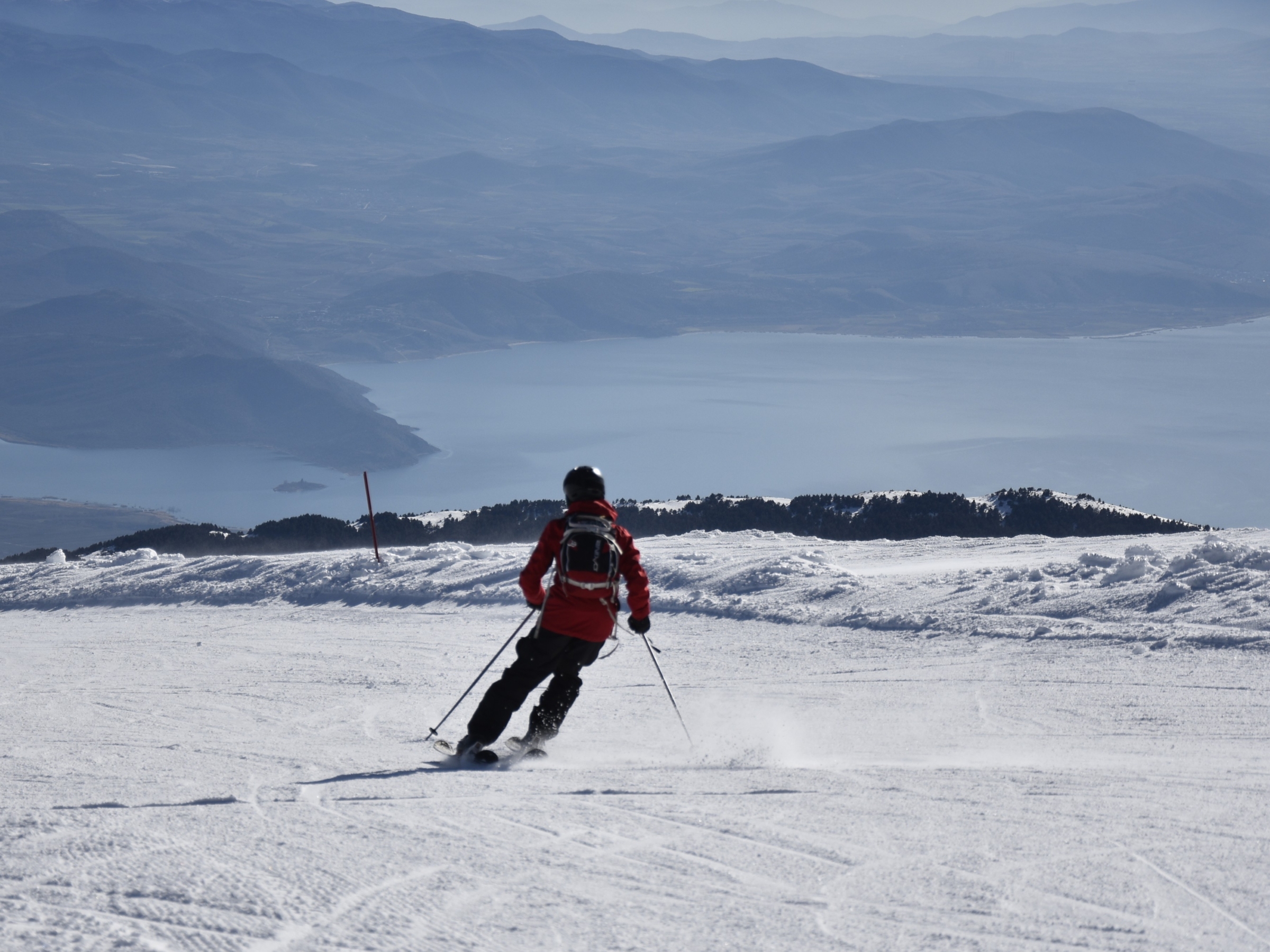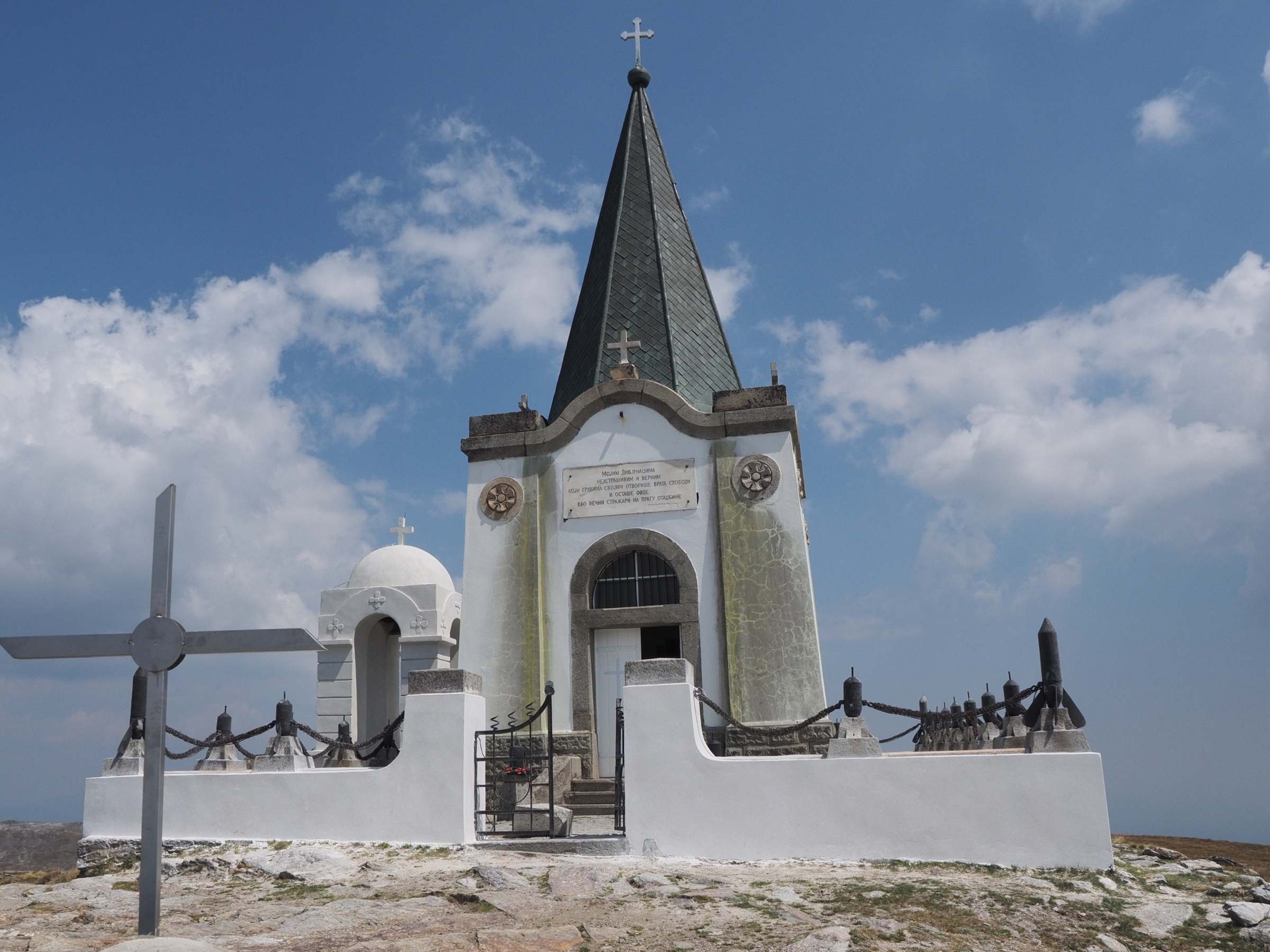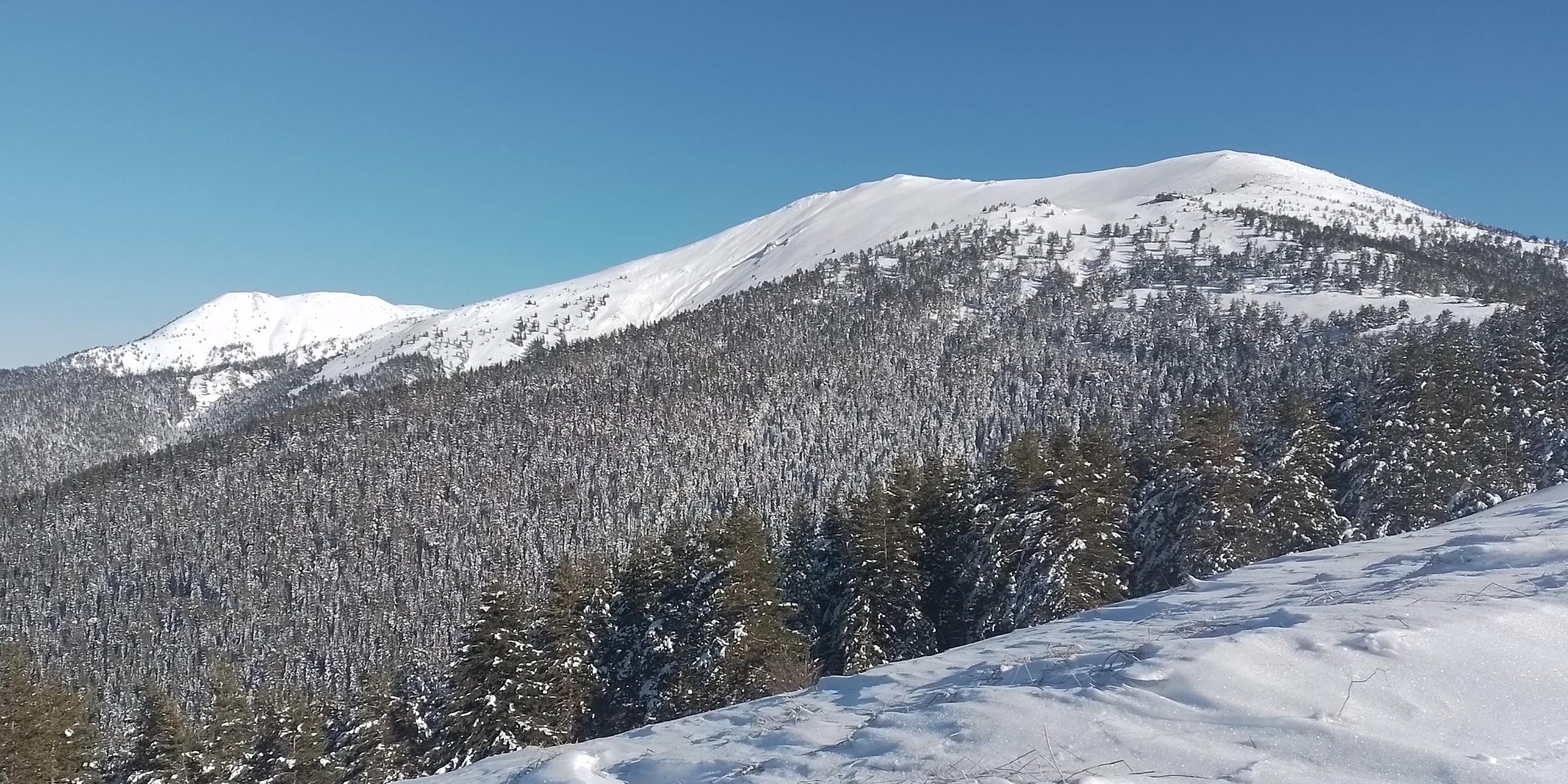
Voras (2524m), also known as Kaimaktsalan, is the 3rd tallest mountain of Greece and dominates the skyline of the northern border of the country, between Florina and Giannitsa. Its highest peak is called Kaimaki, the most popular village is Palaios Agios Athanasios on the southwest, while on its slopes the highest ski center in Greece can be found.
Archeological findings as well as mythological elements suggest continuous habitation of the area at least since the neolithic period, while it later became a regional center for the Macedonians and Romans. Very important was the development of christianity with a plethora of churches in the region, most characteristic of which is the Serbian chapel of Saint Peter on the summit.
Even though Voras is a very popular destination for outdoor tourism, with the summit seeing thousands of visitors annually, it does not feature any rocky terrain at elevation. As a result, the climbing routes on the massif can be found much lower while the high peaks are ideal for winter sports and year-round hiking.
Access
The position of Voras at the border of Greece, between the plains of Amyntaio and Aridaia, makes it easily accessible from Thessaloniki, but also from neighboring countries. The approach to Aridaia is possible via the city of Edessa, while for Agios Athanasios we continue following the Edessa - Florina National Road until Lake Vegoritida.
Routes overview
The earthen massif of Voras in conjunction with the mixed lithology of its pedestal form curious rock-climbing conditions with the interest being focused on accessible sections of limestone at the plain of Aridaia to the southeast. In total there are 58 routes, primarily sport climbing, with difficulties from 5a to 7c+ and a height of 15m to 700m. To repeat any of the sport routes, one 70m rope and 18 quickdraws are sufficient.
The two developed crags on the massif, Loutraki and Nea Zoi, are situated at a low elevation and have a southern orientation, thus offering the best conditions for climbing during the winter months. The rock quality in both areas is considered mixed. Loutraki features multi-pitch sport and traditional routes of moderate difficulty on clean limestone. In contrast Nea Zoi offers single-pitch sport routes of wide difficulty on highly karstified limestone.