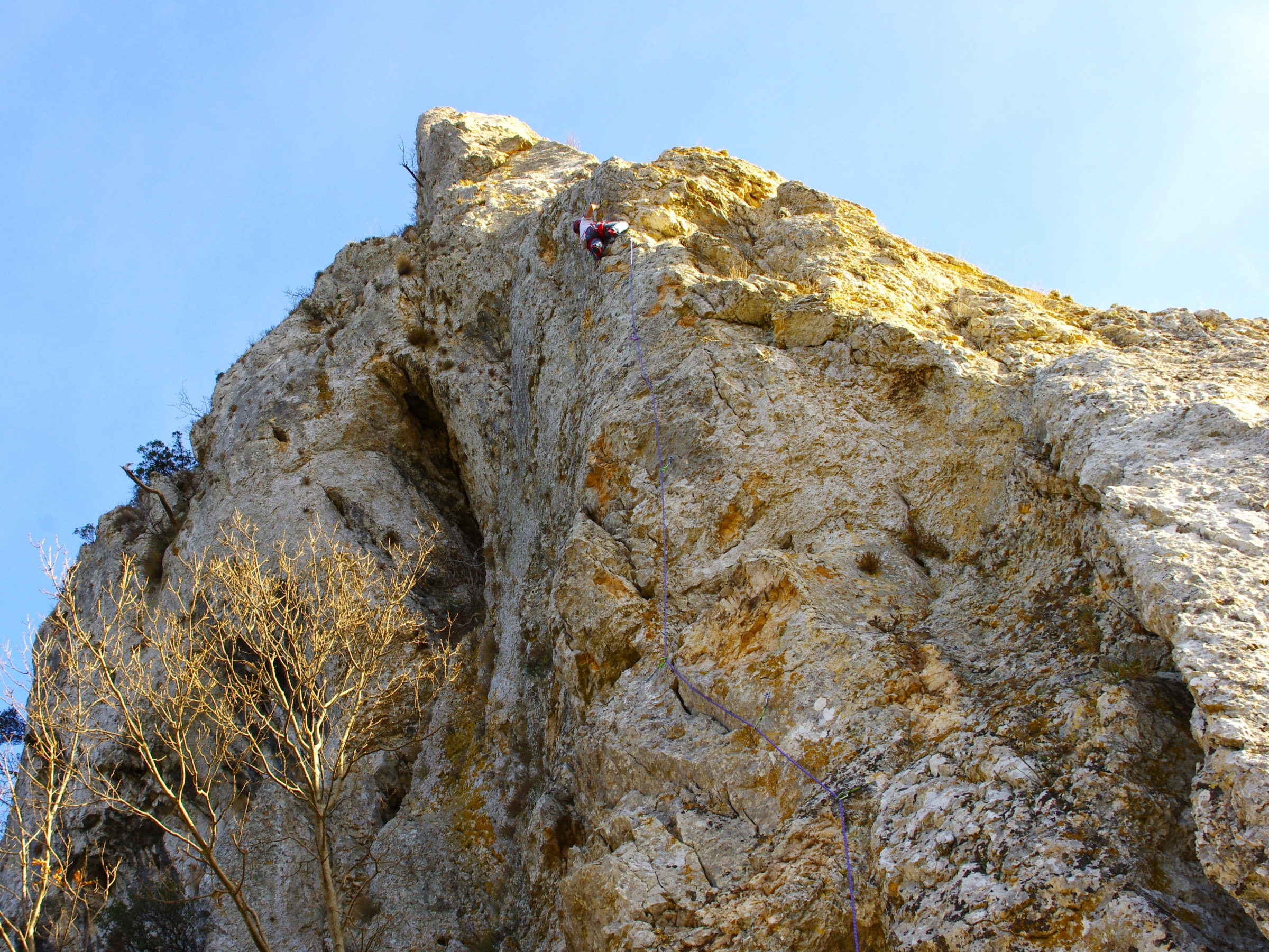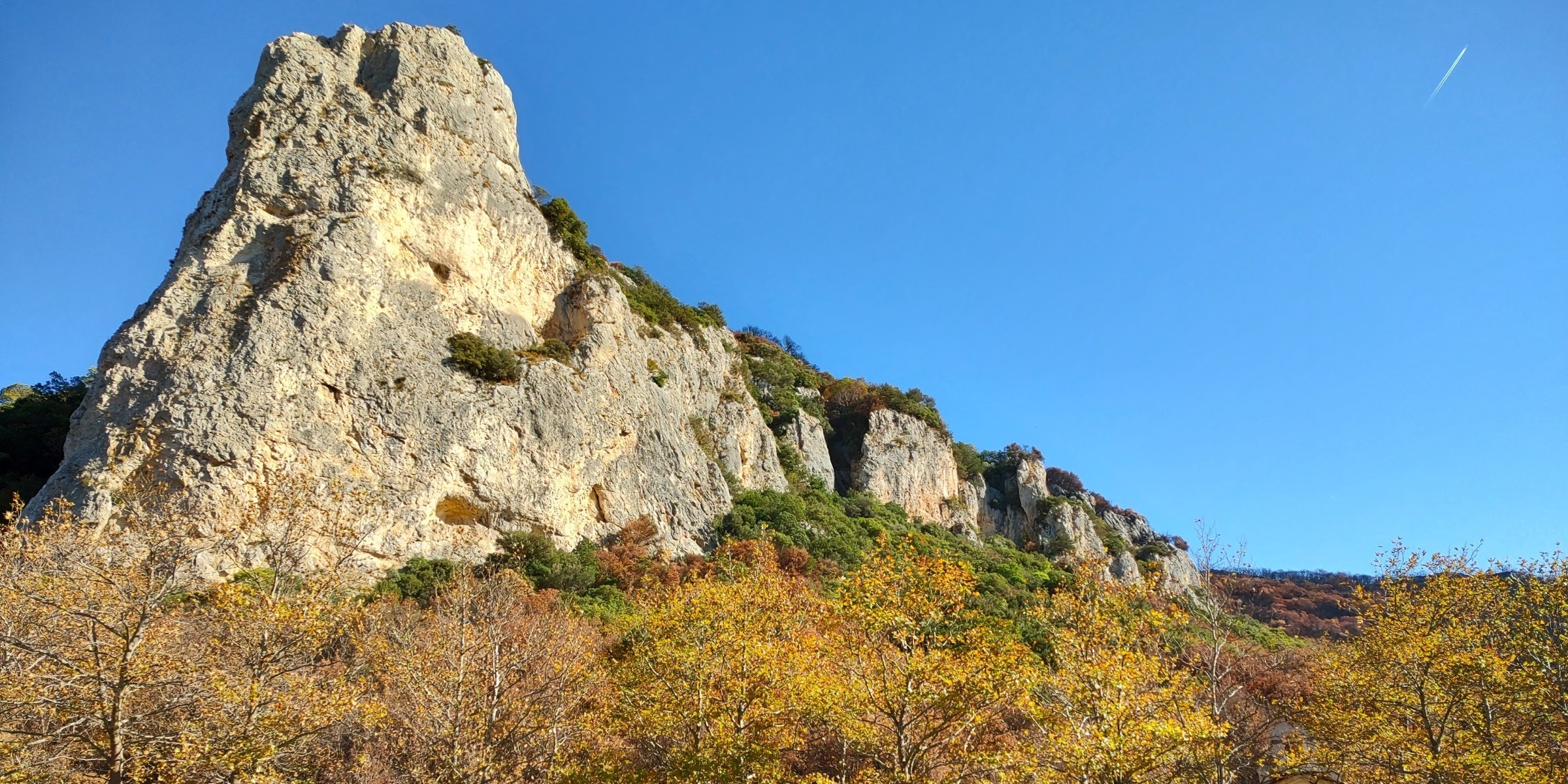
The imposing Pyrgos (Tower) is the northernmost limestone formation within the valley of Avantas and has piqued the interest of climbers since the 1990s due to the pillar, exceeding 100m in height, which begins just by the road. Pyrgos offers both traditional and sport climbing routes, varying from 1 to 3 pitches. The left sector (pillar), with a west aspect, is equipped with sport routes graded 6a to 6b and with a height of 70m to 110m, as well as one traditional route graded V and of 100m in height. The right sector, facing south, has sport routes with a grade from 5b to 7a and heights from 10m to 25m, equipped with open-type anchors.
Access
Approaching the area via EO53 from Alexandroupolis, the Pyrgos formation is visible at the back of the valley, about 1Km from the village, on the right-hand side of the road. There is a parking area at its base, next to the chapel of Agios Athanasios. From the chapel we follow a steep and narrow trail marked in red, which first travels left towards the base of the pillar. If we continue to the right, parallel with the rock for another 5min, the right sector is reached. The approach hike to the base of the pillar does not exceed 10min, while besides red marks there are also signs.
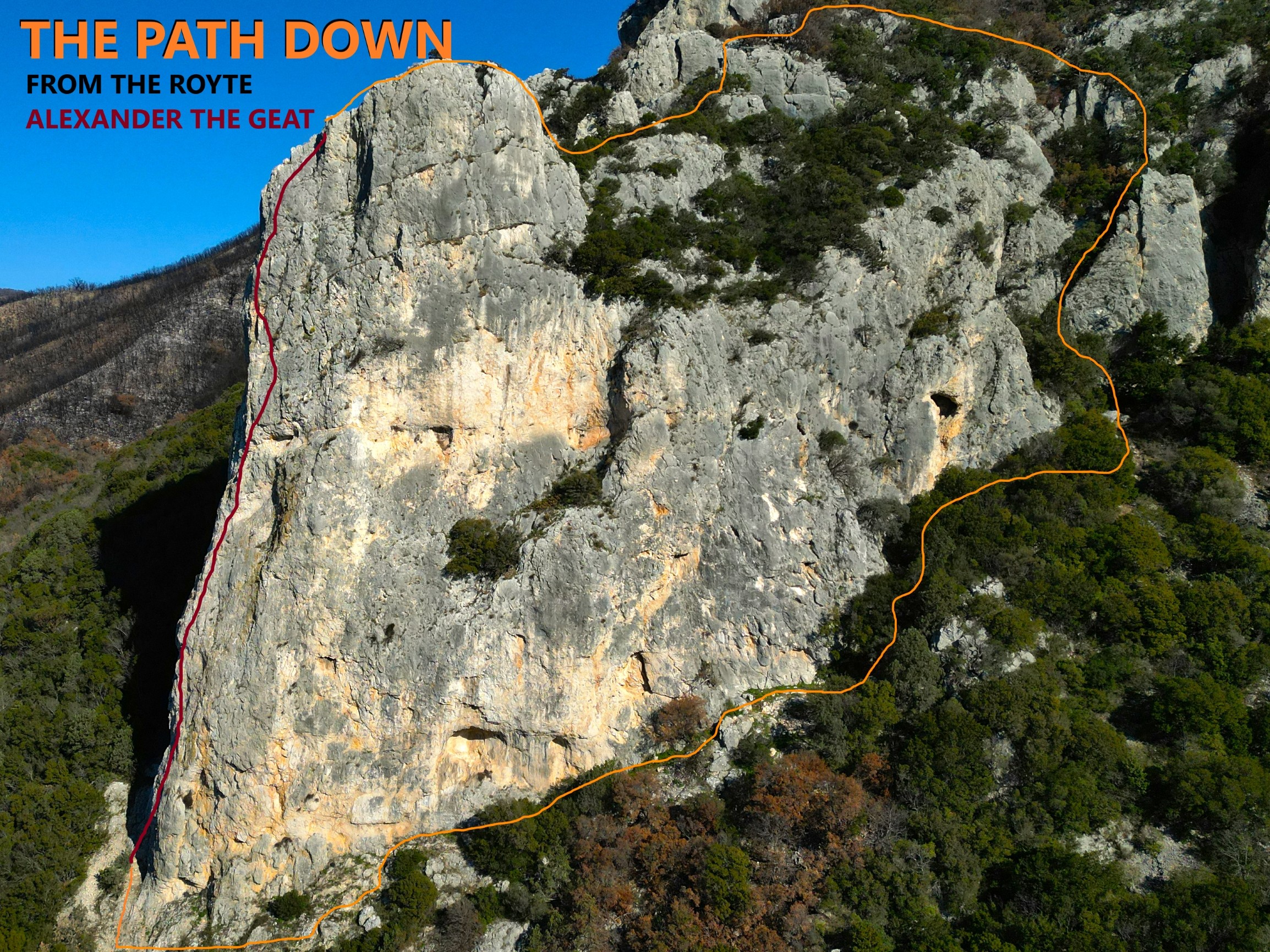
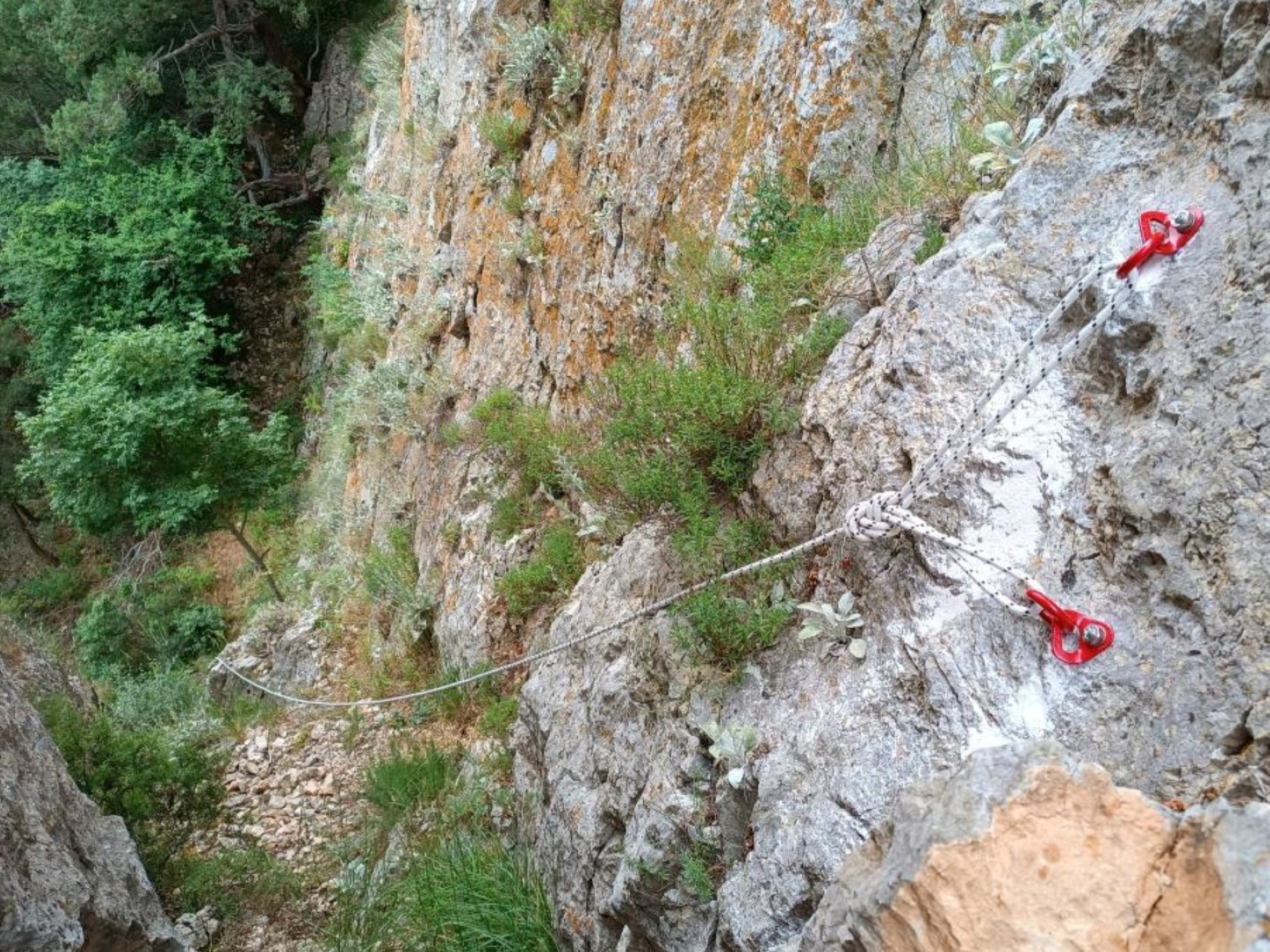
For the return from the top of the pillar it is possible to rappel with two 70m ropes, but also to simply down-hike via a very steep path which is equipped with fixed ropes and leads to the base of the nearby Donti crag.
Climbing history
Pyrgos was the second formation climbed in Avantas, with the traditional route “Agios Athanasios” (V, 100m) being completed by A. Tsileogiorgis and A. Karkatselis in May 1994. The continuation of the efforts to include the pillar into the proverbial climbing map came in 2016 with the original effort to climb the route “Giannis Kinatidis” (6a, 110m) by A. Exakoidis and A. A. Giakoup, and later its completion in 2019 by A. Exakoidis and G. Lechoudis. In 2021 the bolting of the sport sector by A. Du increased the available routes, while in 2024 he completed the third route on the pillar, naming it “Alexander the Great” (6b, 70m).